Equipment
Build your recording kit by budget
“What gear should I buy?” turns into a clear list by spending level — from your free phone to a pro rig, with brands and models worth buying anywhere in the world. The rule that saves your money: buy in this order — SOUND first, then LIGHT, then STABILITY, and the camera LAST.
~11 min read
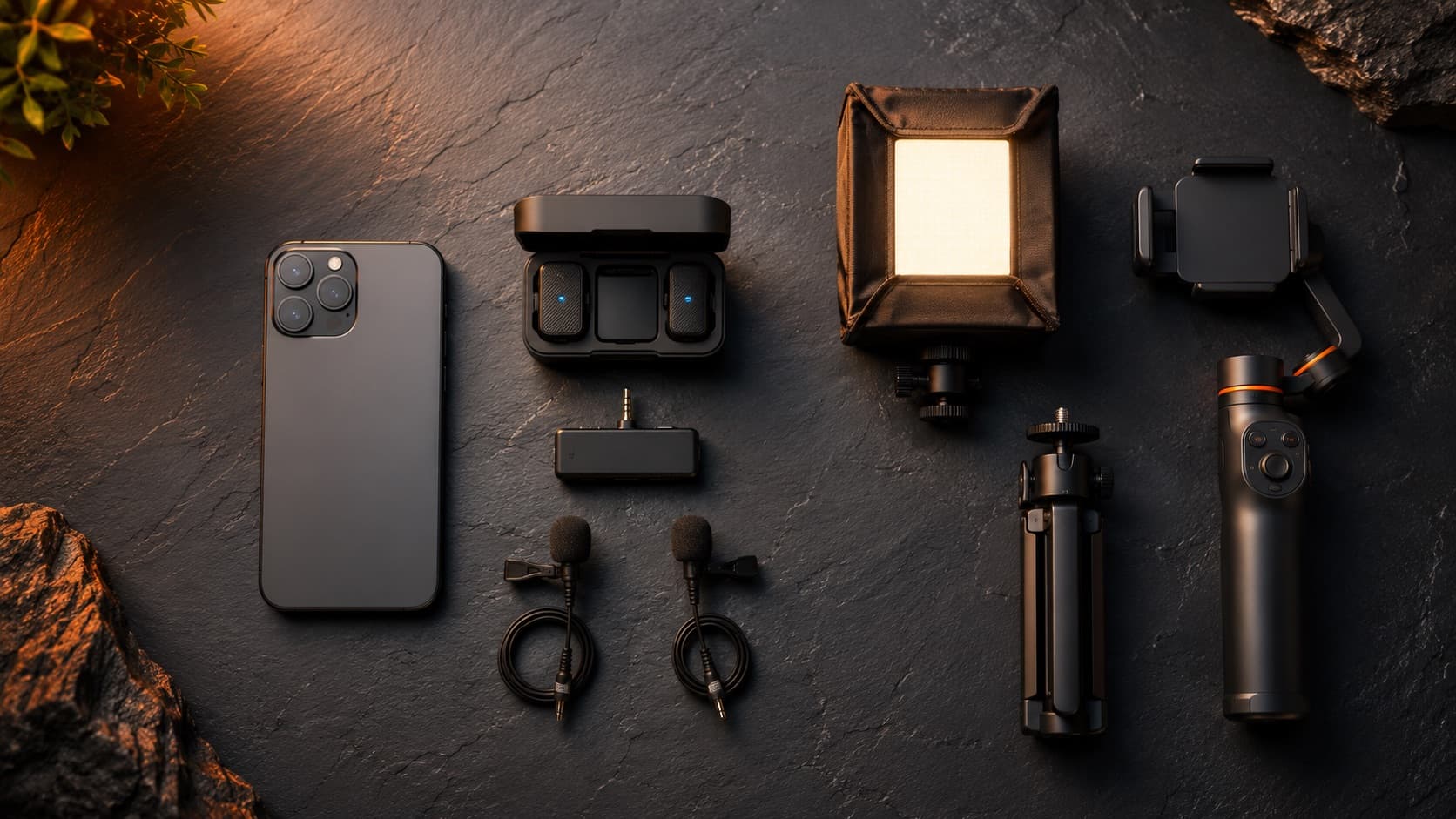
- Where to invest first — the golden money rule: put 30-40% of your budget into AUDIO + LIGHT before you even think about a camera. That's what changes the perception of quality the most.
- Step up one rung at a time — only buy when you hit a real wall (echo → mic; dark/yellowish → light; shaky → tripod/gimbal). This protects your wallet and keeps you from spending wrong.
- Watch out for fakes — Boya, Godox, DJI, and Rode get cloned a lot. Buy from the official store or a well-rated seller on Amazon — a clone comes with worse color/audio and no warranty.
Prices in approximate US dollars (they vary by country, store, and sale) — what matters is the brand and model.
Tier 0 — Phone only (free to ~US$30)
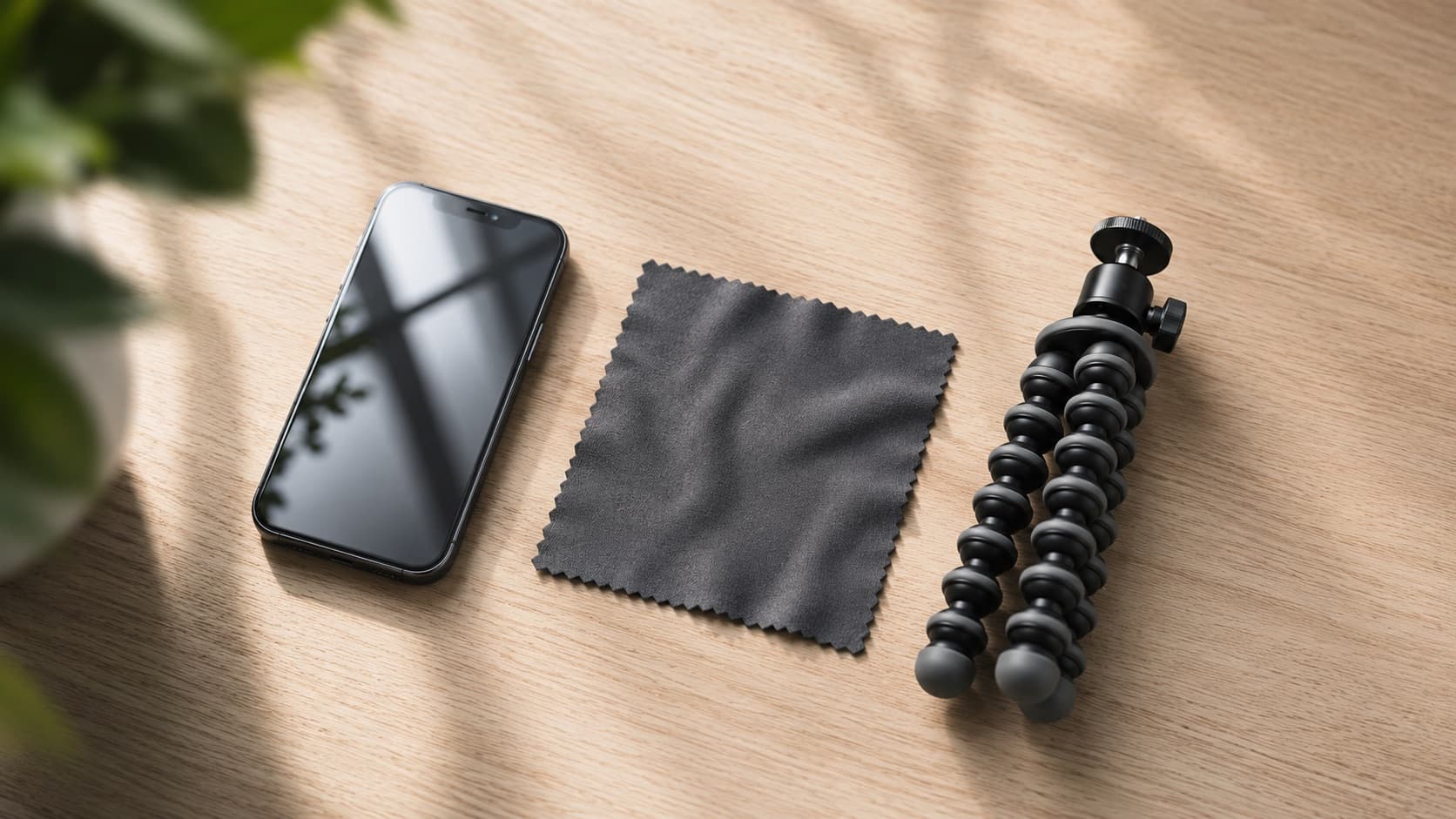
- Camera = the free upgrade — before spending a cent: lock focus + exposure + white balance (auto drifts between takes — mistake #1), clean the lens, turn on the grid, and use a shutter ≈ 2× the FPS (the 180° rule). That alone already looks like a different video.
- Sound — you don't need a mic yet — record in a small, “soft” room (curtains, a couch, or a wardrobe all kill the echo), with the phone ~30 cm from your mouth. Turn off the AC and the fan.
- Light — for free: face a window during the day (window in front of you, never behind). See lighting.
- Stability — a sturdy mini tripod (Manfrotto PIXI, ~US$25). Trick: with the legs folded it becomes a thick handle — a much steadier grip.
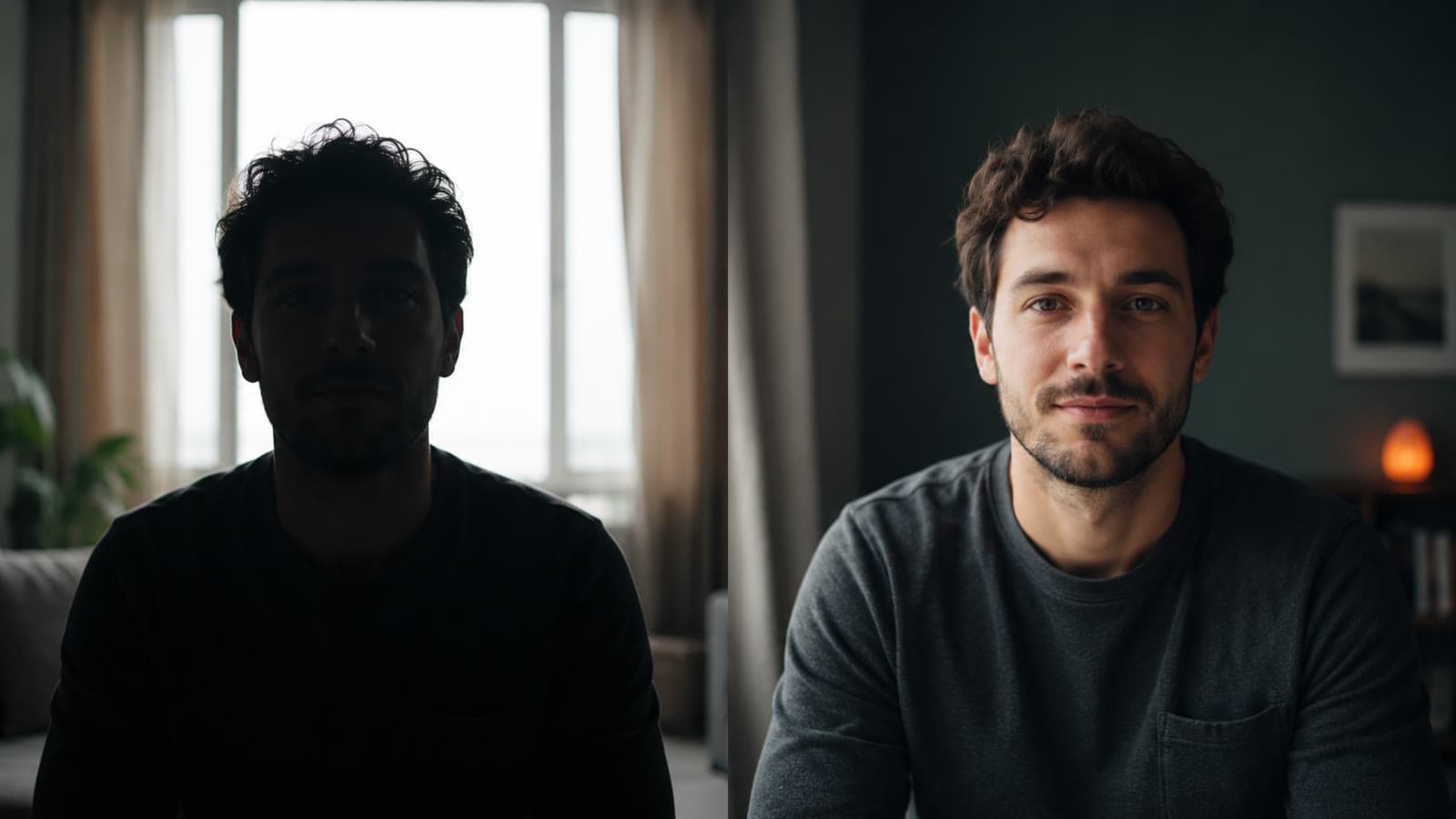
Tier 1 — The first leap (~US$100 to US$300): sound + light
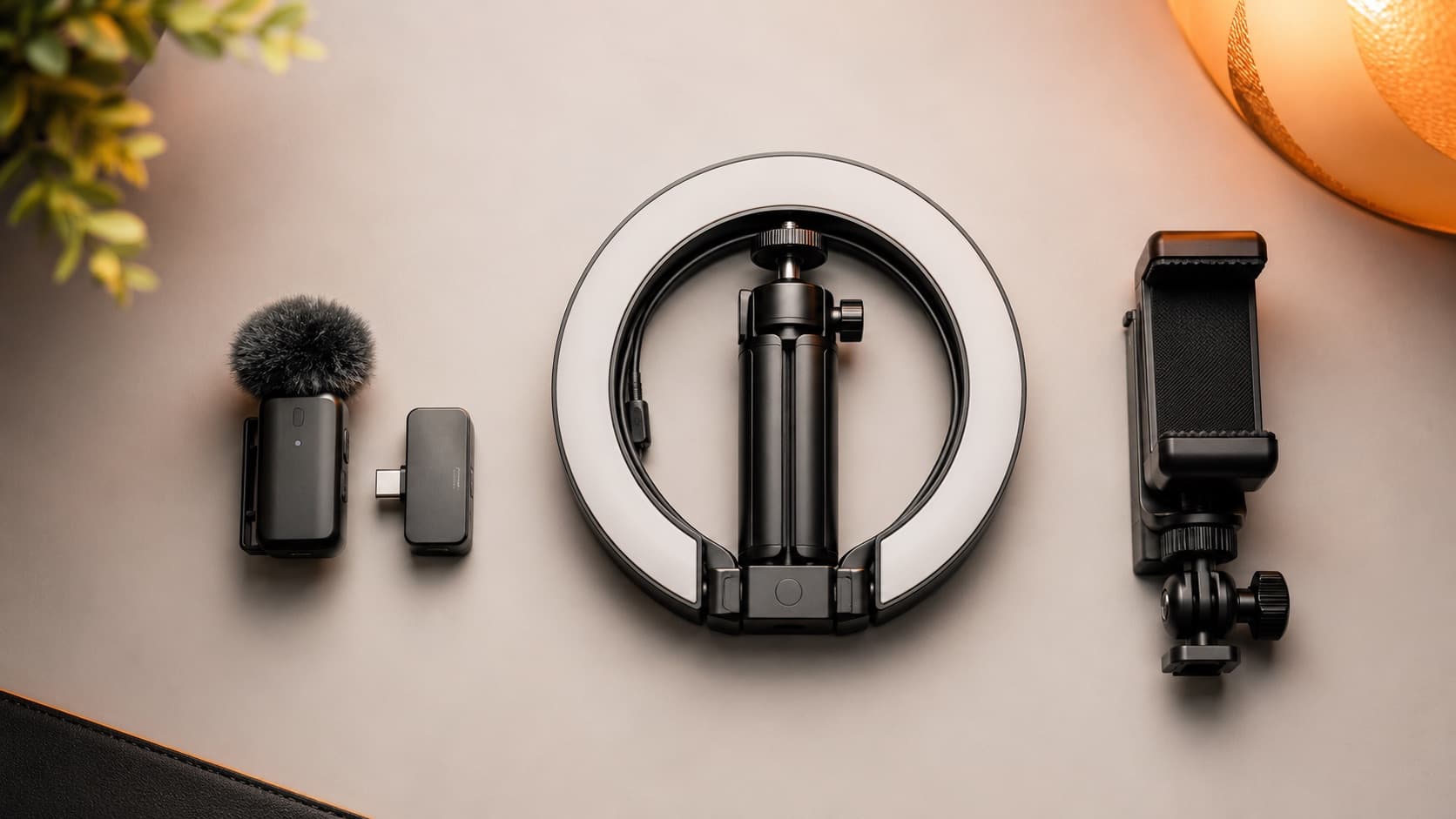
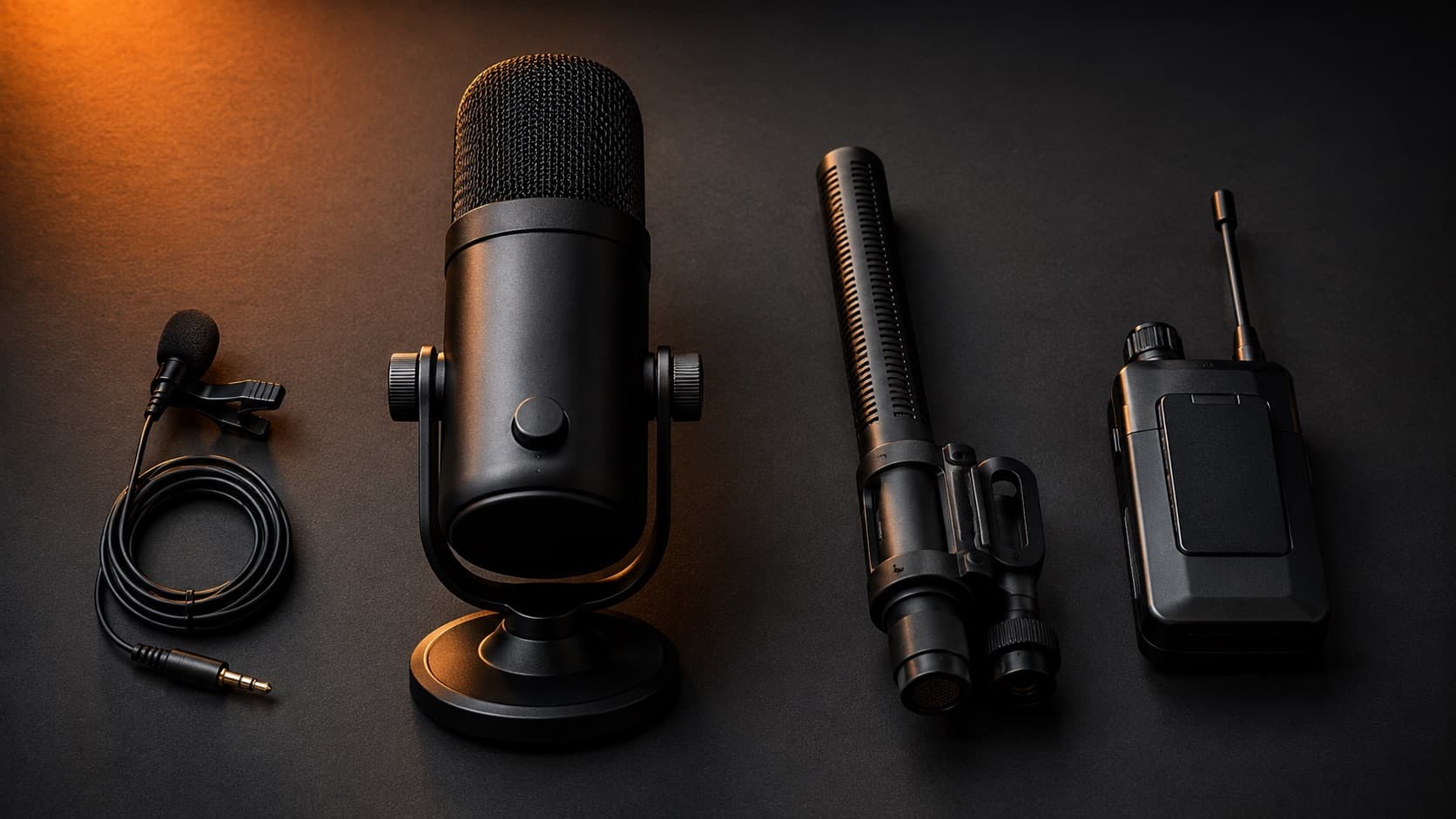
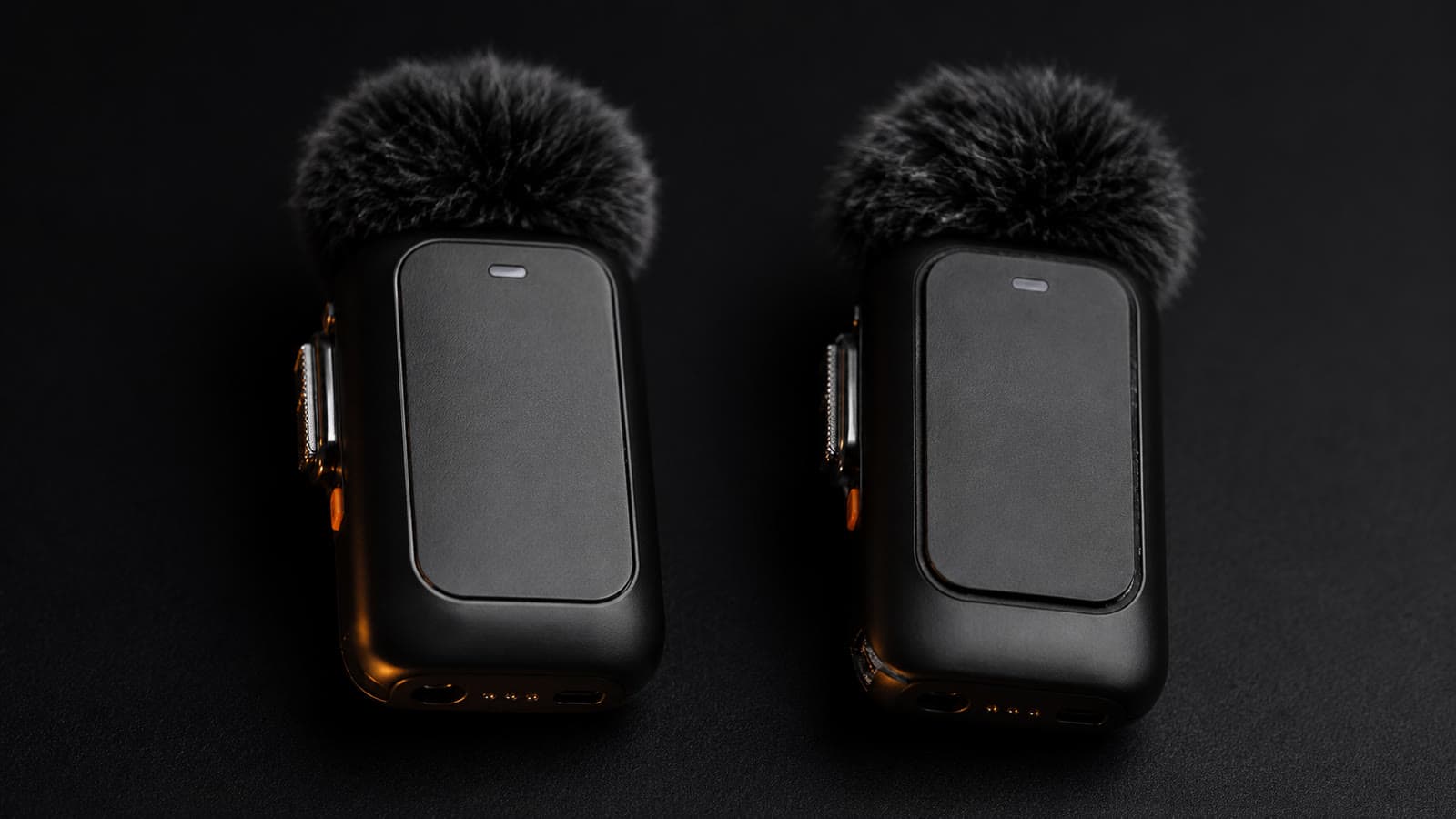
- Mic (the priority buy) — Rode VideoMic GO II (~US$99) — works as a shotgun on the camera AND as a USB-C mic on your phone/computer, two in one. If you move around, go wireless: Boya BOYALINK 2 (~US$112, 2 transmitters + 3 connectors).
- Light — Godox SL60 II (~US$130-160, Bowens mount) + a cheap softbox (~US$40) — the cheapest way to get a big, soft light. To start spending nothing, the window still wins.
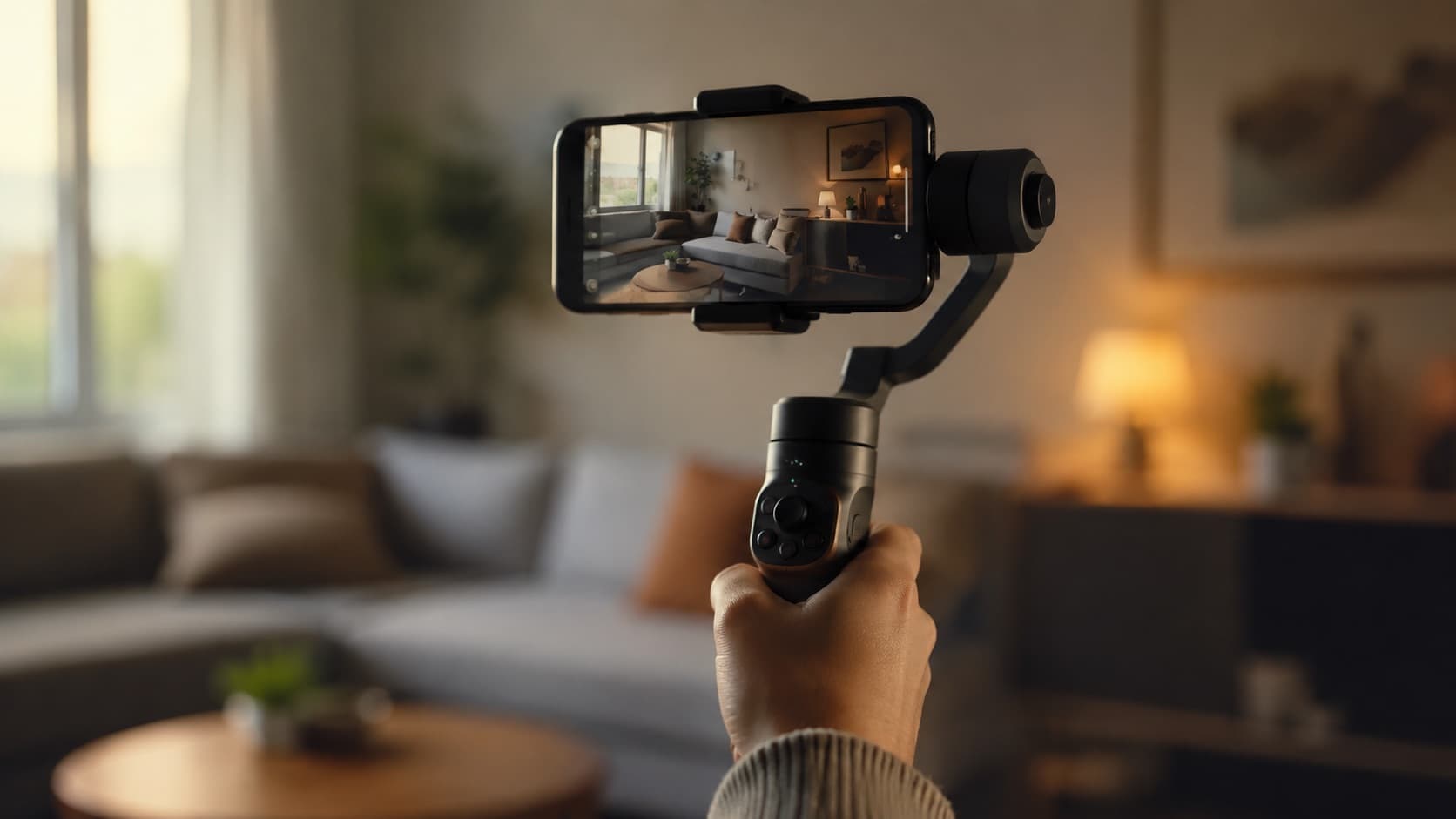
- Stability — a sturdy tripod if you record static; or an entry gimbal, the DJI Osmo Mobile 7 (~US$89), for walk-and-talk and kids.
Tier 2 — Mid-range (~US$400 to US$900): the quality leap
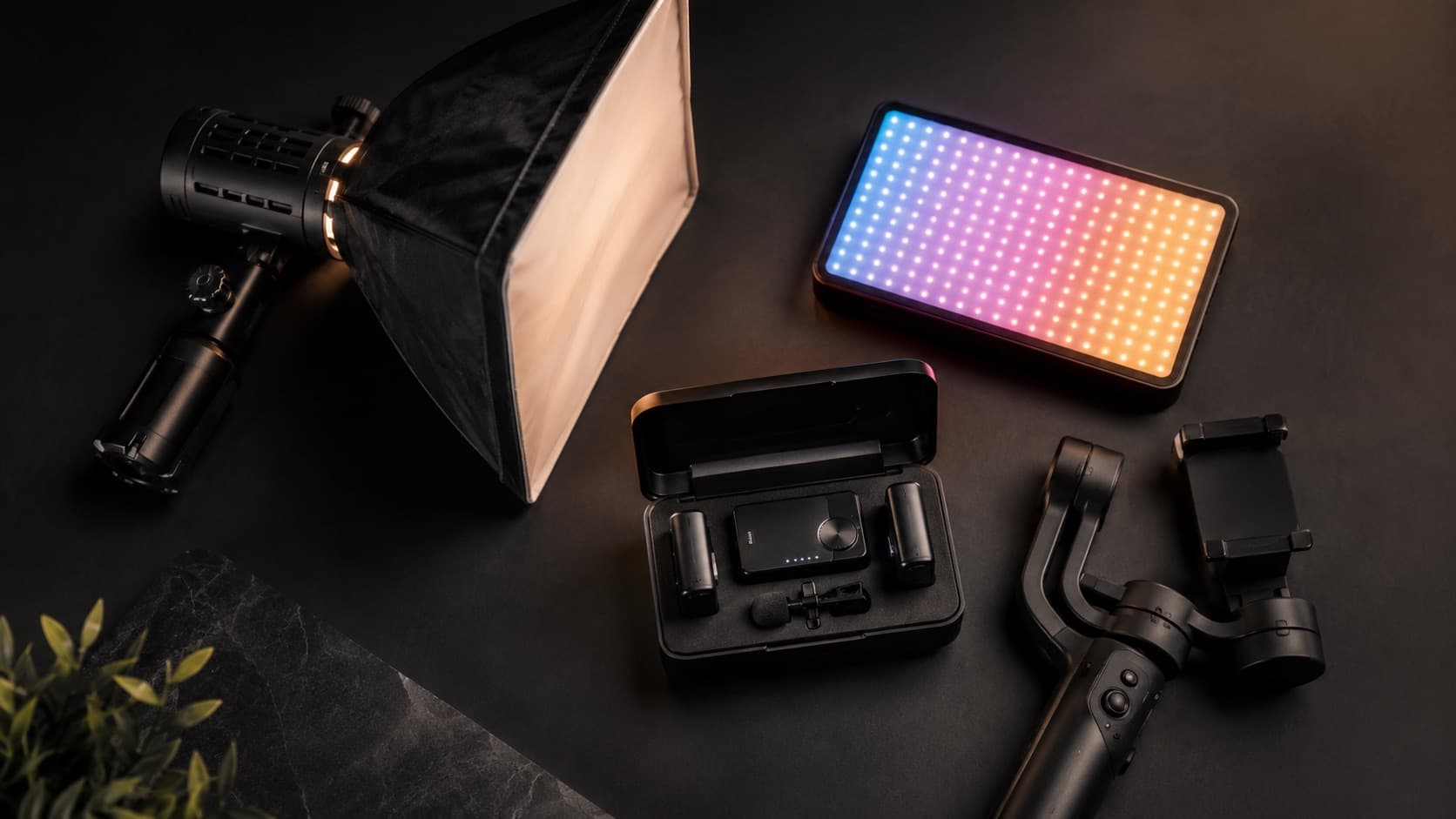
- Mic — DJI Mic 2 (~US$349) — wireless with 32-bit float (it won't clip no matter how loud you get), USB-C + Lightning, better noise cancellation. 2 transmitters for you + a guest.
- Light (the key upgrade) — Amaran 100d S (~US$159-199, daylight, TLCI 99+ color, Bowens mount) + a softbox — the jump from “flat” to “shaped.” For a kids channel, a Godox TL30 RGB tube (~US$89) handles the background color.
- Stability — the DJI Osmo Mobile 8 gimbal (~US$149, ActiveTrack, built-in rod + tripod) — the sweet spot for anyone who moves.
Tier 3 — Pro (US$1,500+): redundancy and, at last, the camera
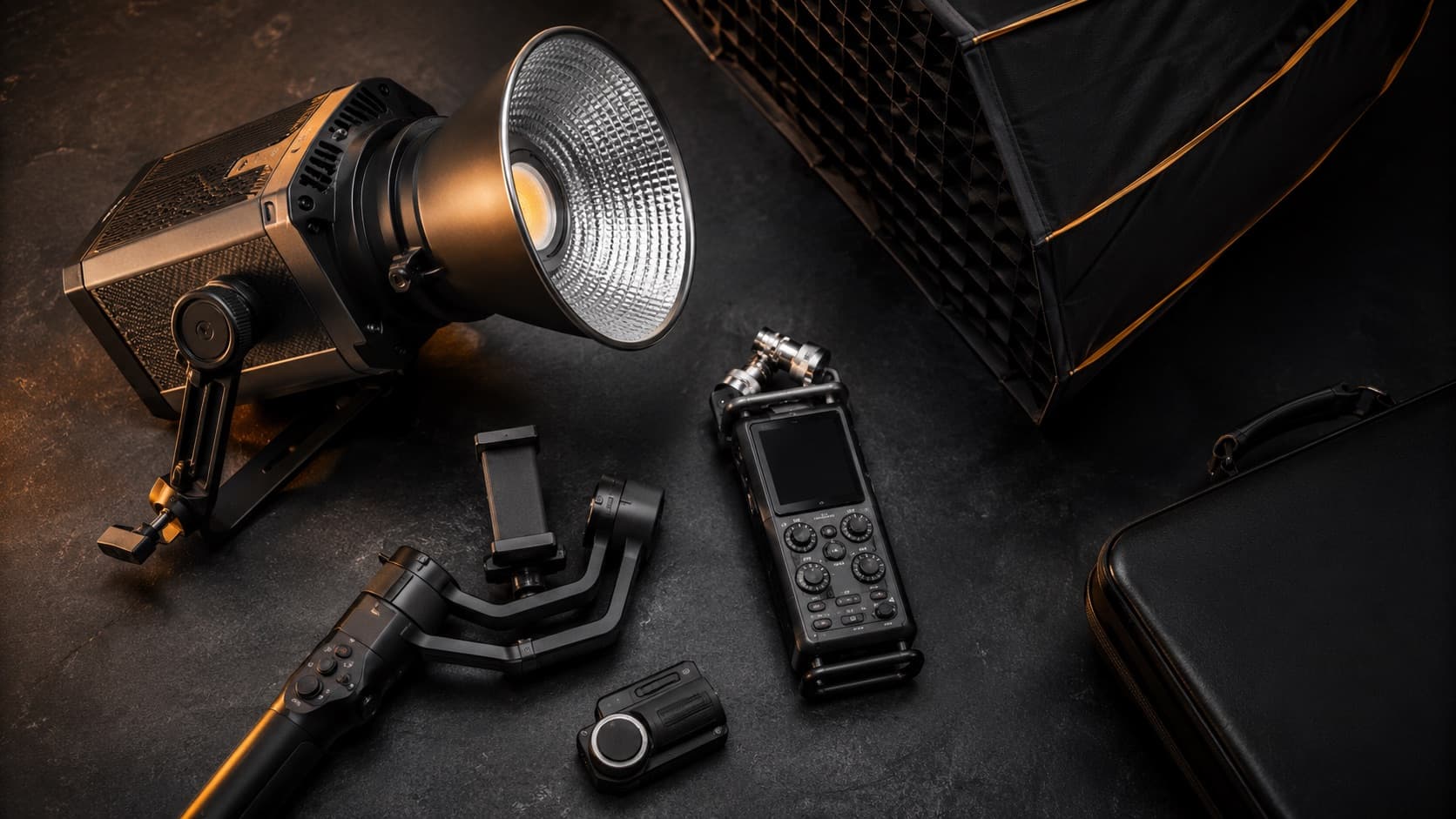
- Sound — DJI Mic 2/3 + a 32-bit float recorder, the Zoom H1essential (~US$99), as a clip-proof backup. Audio redundancy is what separates the pro from the amateur.
- Light — Amaran 200d S (~US$399) + modifiers (softbox, grid) and a 2nd rim light to separate you from the background — the biggest “look” jump after key + softbox.
- Stability — a fluid-head tripod (Manfrotto MVH500AH, ~US$200) for smooth moves; or the top of the line, the DJI Osmo Mobile 8P.
- Camera (at last — last of all) — only now: Canon EOS R50 V (~US$650) with an interchangeable lens, or Sony ZV-E10 II (~US$1,000, best all-rounder). For handheld, the DJI Osmo Pocket 3 (~US$520) is camera + gimbal in one. Spend the rest on the LENS, not a pricier body.
Quick pick by who you are
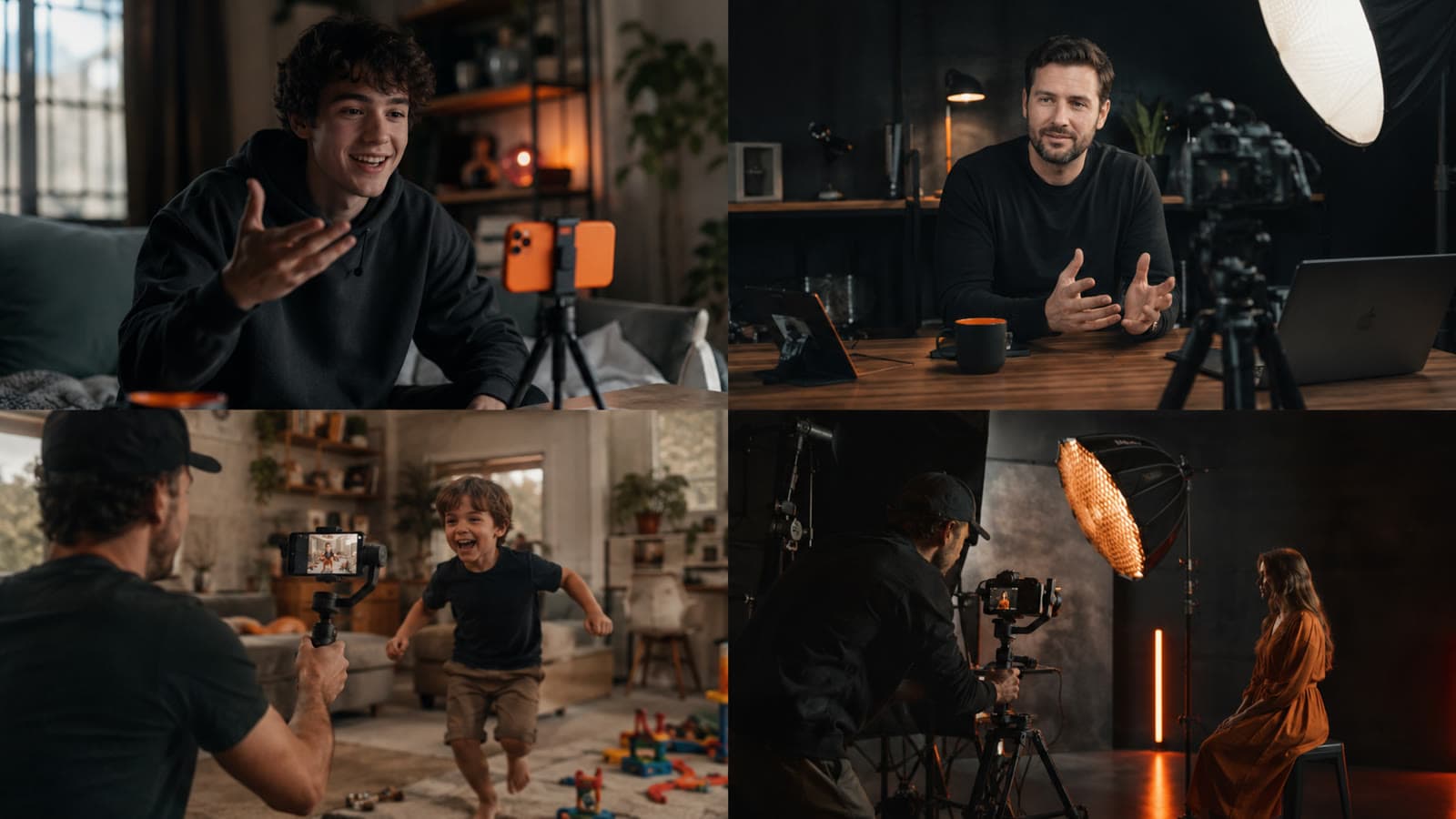
- Beginner / phone-first — stay on Tier 0 and add ONLY the mic: Rode VideoMic GO II (~US$99) or a Boya wireless. Audio is the highest-impact purchase there is.
- Course creator (talks to camera, indoors) — mic + one good light (Godox SL60 II → Amaran 100d S, always with a softbox) + a sturdy tripod. Rarely needs a gimbal — you stay put.
- Kids content (movement, color, daytime) — window light + a gimbal early (Osmo 7 → 8, because kids move and ActiveTrack follows) + an RGB tube/panel for a colorful background.
- Going pro / charging clients — Tier 3: Amaran + a 2nd light, DJI Mic + a Zoom backup, a fluid head or Osmo 8P, and the camera last. Redundancy (a backup mic + light) is what defines a pro.
Comparison: brands, models, pros and cons
From entry to pro, side by side. Audio — go deeper on microphones:
| Model | ~US$ | Pros | Cons |
|---|---|---|---|
| Rode VideoMic GO II | 99 | 2-in-1: shotgun on the camera + USB-C mic on phone/PC | wired; mono |
| Boya BOYALINK 2 | 112 | wireless, 2 transmitters, 3 connectors, cheap | no 32-bit float |
| DJI Mic 2 | 349 | float (never clips), great noise cancellation, USB-C + Lightning | pricier |
| Zoom H1essential | 99 | float, “just hit REC,” clip-proof backup | it's a recorder, not wireless |
Light — go deeper on lighting:
| Model | ~US$ | Pros | Cons |
|---|---|---|---|
| Window light | free | a big, soft source you already have | daytime only; changes with the weather |
| Godox SL60 II | 130-160 | Bowens mount, good color — the real starter | needs a separate softbox |
| Amaran 100d S | 159-199 | TLCI 99+ color, Bowens, light — the hero | daylight (no RGB color) |
| Godox TL30 (RGB) | 89 | any background color, battery — great for kids | it's a color tube, not a key light |
Stability:
| Model | ~US$ | Pros | Cons |
|---|---|---|---|
| Manfrotto PIXI | 25-30 | sturdy; folded legs become a grip (trick) | small (desk/handheld) |
| Full-height tripod | 20-40 | frames at eye level when standing | bulky |
| DJI Osmo Mobile 7 | 89 | entry gimbal, ActiveTrack | no extension rod |
| DJI Osmo Mobile 8 | 149 | the sweet spot: built-in rod + tripod | overkill if you stay put |
Camera — only after everything else. Go deeper on recording with your phone and resolution and FPS:
| Model | ~US$ | Pros | Cons |
|---|---|---|---|
| Your phone | 0 | already shoots 4K/10-bit; always with you | small sensor (struggles in low light) |
| DJI Osmo Pocket 3 | 520 | camera + handheld gimbal in one; 1” sensor | small screen; no lens swap |
| Canon EOS R50 V | 650 | interchangeable lenses, video-first | you have to buy lenses |
| Sony ZV-E10 II | 1,000 | best autofocus/all-rounder, 4K60 10-bit | pricier |
The DJI Osmo Mobile line updates fast (7, 8, 8P…) — check the current model when you buy.
What actually matters (and what doesn't)
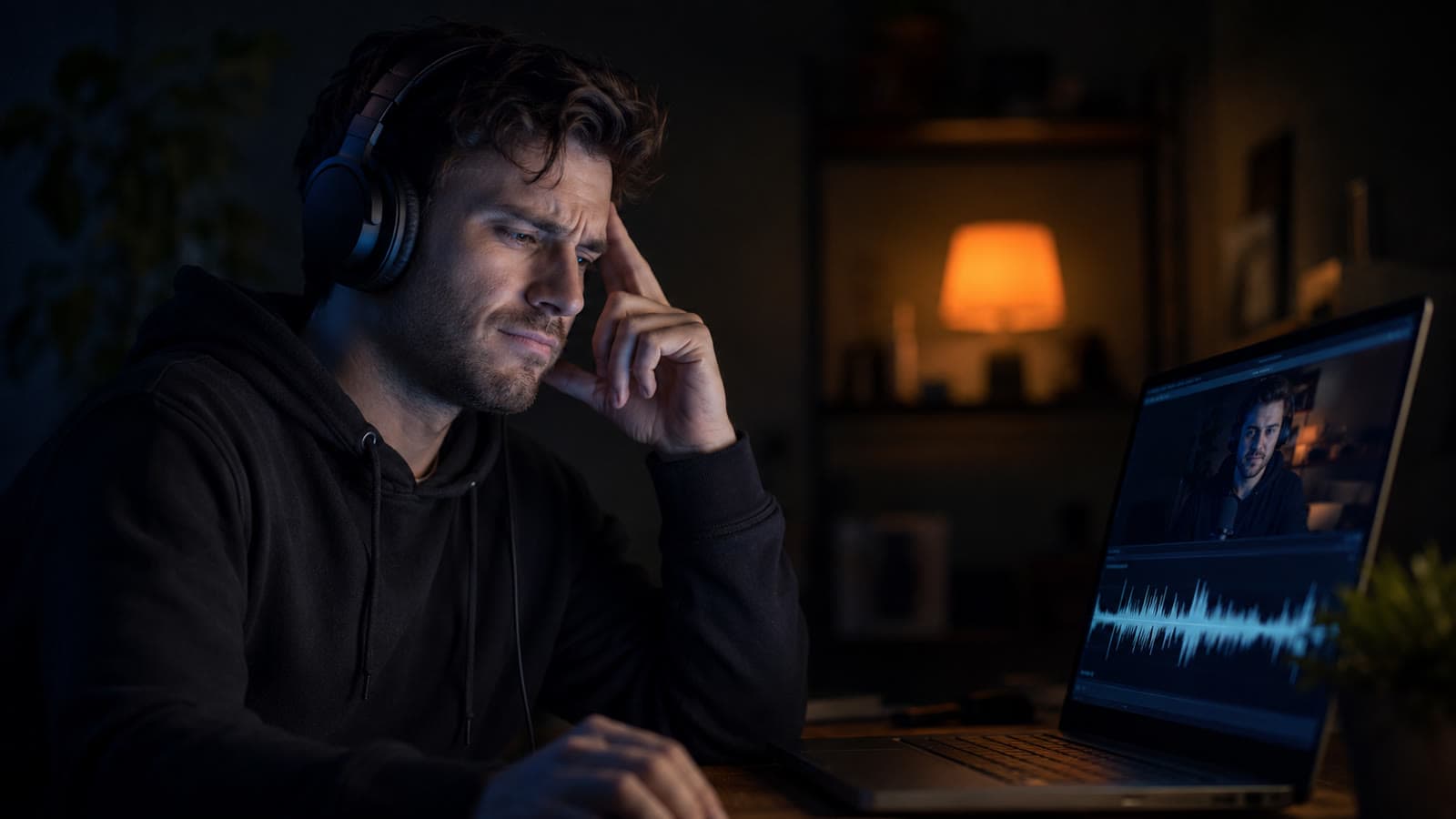
- MATTERS — distance and room (audio) — a mic close to the mouth + a quiet, soft room beat any expensive mic. A good mic in an echoey room only records the echo.
- MATTERS — light size — a big, soft source up close > watts. Look for CRI/TLCI ≥95 color and a Bowens mount (so any softbox fits).
- MATTERS — sturdiness and height — a cheap sturdy tripod beats a pricey wobbly one; and framing at eye level does more for quality than expensive gear.
- DOESN'T matter — megapixels and 8K — your audience notices bad audio and bad light, never megapixels. Extra resolution only helps for heavy cropping.
- DOESN'T matter — too much gear — a gimbal for a static talking-head, a ring light for serious speaking, a V90 SD card in a body that can't use it — money down the drain.
Go deeper on each piece: microphones, lighting, recording with your phone, framing, and resolution and FPS.
Quick questions
What should I buy first?
Audio. Bad audio sinks good video — and it's the highest-impact purchase you can make. If you buy one thing only, the Rode VideoMic GO II (~US$99) works as an on-camera mic AND as a USB-C mic for your phone or computer. If you move around, go wireless with something like the Boya BOYALINK 2 (~US$112).
Do I need a camera, or will my phone do?
Your phone is enough for most people — in 2026 it shoots 4K/10-bit, and the camera is almost never the weak link. Stepping up to a dedicated camera is only worth it when you hit a real wall: low light, interchangeable lenses, or client work.
Tripod or gimbal?
Static camera (talking-head, course) = tripod. You or your subject move (walk-and-talk, kids) = gimbal. Free trick: a mini tripod with its legs folded becomes a thick handle — a steadier grip (it's not a motorized stabilizer, but it helps a lot).
Is a ring light any good?
Only for beauty/makeup close-ups on the phone. For serious talking-head it flattens the face and reflects in glasses — go with a COB light and a softbox instead (a big, soft light that “shapes” the face).
Is 8K or lots of megapixels worth it?
For almost no one. Your audience notices bad audio and bad light, not megapixels. Extra resolution only helps with heavy cropping (sports/wildlife at a distance). Spend on sound and light first.
Got the footage? See how to send your material the easy way. Gear helps, but what turns raw footage into premium video is the editing — and that's HEY JOE's part.