Grow on YouTube
Retention: how to hold the viewer in the first seconds
An amazing ending is worthless if no one gets there. In online video, the first seconds decide almost everything — and you can work on that on purpose. Here's how, and how to read the retention curve the way YouTube itself teaches.
~12 min read
1. Why the first seconds decide everything
Online viewers have a finger on the exit button at all times. And YouTube watches: if people leave right at the start, it concludes the video disappointed and stops recommending it. Holding attention at the start is what unlocks reach — before any “algorithm trick.”
YouTube even has a metric just for this — in the report it's called Intro: what percent of the audience was still watching after the first 30 seconds. A high number there means the opening delivered on what it promised.
As a reference (these are market benchmarks, not an official YouTube number): holding around 60-70% of the audience at 30 seconds is healthy; losing more than ~40% over that stretch is a sign of a weak hook. YouTube itself sums it up by saying the first 15 seconds “make or break” the video.
2. Start with the best part (the hook)
The biggest mistake is opening with 15 seconds of intro, “hey everyone, how's it going?” and an ask to subscribe. No one's arrived yet — there's nothing to ask for. Start with the strongest part: the promise, the question or the most surprising moment.
- Deliver the title's promise right away — if the title promises something, show in the first seconds that it'll be kept.
- Open a question — something that only resolves by watching (“what happened next was unexpected”).
- Show, don't announce — instead of “today I'll teach you X,” just start doing X.
- Leave the intro for later — if you want a visual signature, keep it very short — or fold it into the action.

A few hook templates you can copy — and how much you can rely on each:
- Show the result first — open with the finished “after” and promise to show how you got there. It's the most solid — it slots right into the logic of the curve.
- Open a question (a curiosity gap) — leave something unanswered that only closes by watching. It has a real basis (the Zeigarnik effect — we don't relax with what's left half-done).
- A pattern interrupt — something unexpected in the very first frame that makes the thumb stop. It works, but it's more art than science.
- A bold claim — carefully — “you're doing X wrong” grabs people, BUT if the video doesn't deliver it becomes clickbait and tanks retention. Only use it if you'll back it up.
The rule underneath all of them: the opening has to deliver what the title promised.
3. Cut everything that's dead weight
Pacing is retention. Every long pause, “um… so… you know” and dead beat is a chance for the person to leave. A lean edit — taking out what doesn't add — keeps the video breathing and attention alive. This is where editing does the most for retention: the right cut at the right moment, the heart of the editing fundamentals.

Bad sound also drops retention: the person doesn't “see” badly, they give up on listening. It's worth pairing this with why audio is the #1 mistake.
4. Read the retention curve (the best free teacher)
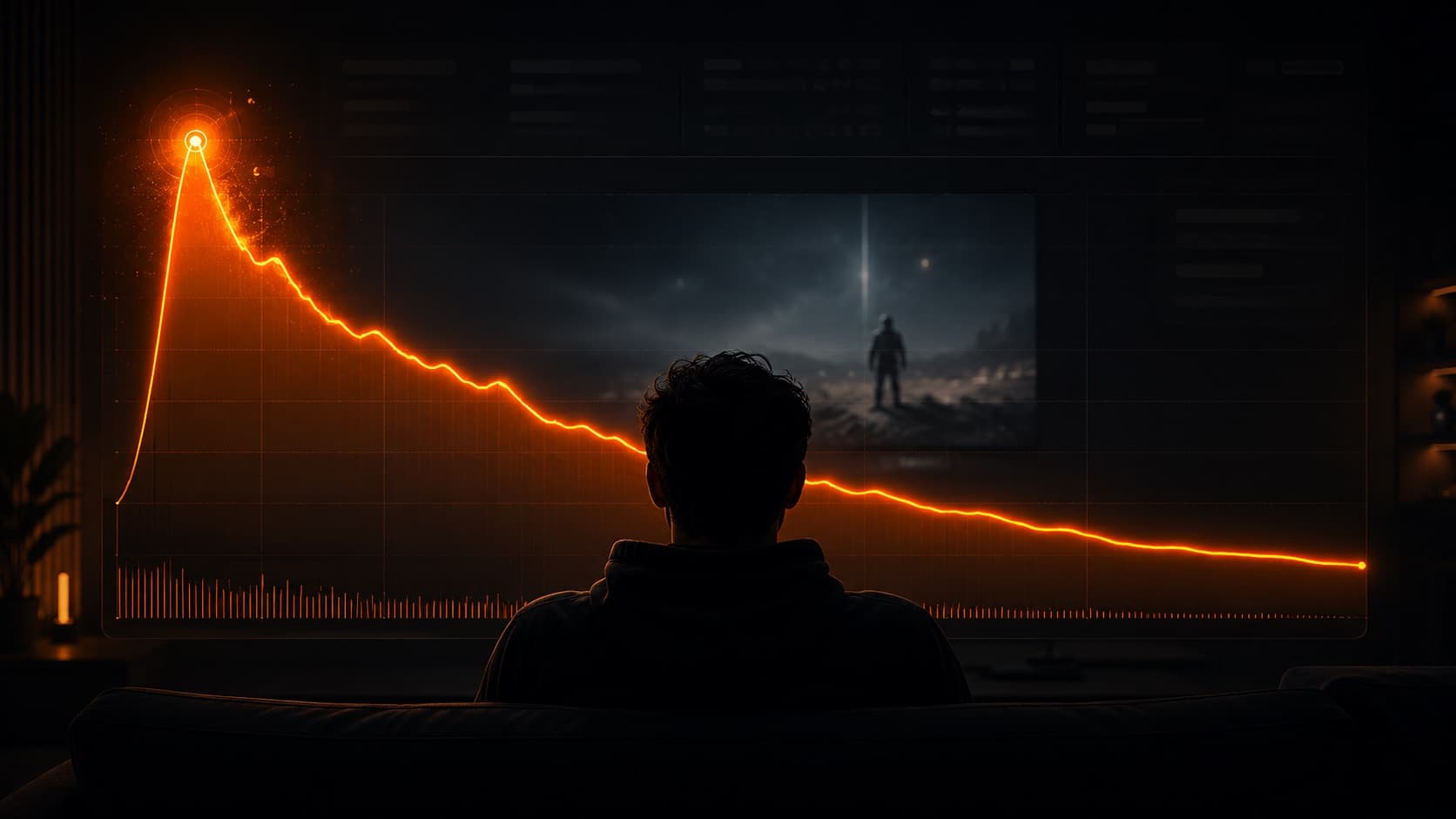
In YouTube Studio, the audience retention report shows exactly where people stay and where they leave (it works for any video with at least 60 seconds and 100 views; the data takes 1-2 days to process).
First, two curve shapes you'll see — this is an informal description, not YouTube's name for them: a flat line (they're watching that stretch from start to finish — the ideal) and a gradual decline(natural loss over time; every video narrows down, it's normal).
Now the four points YouTube actually names in the report:
- Intro — what % kept going after the first 30 seconds. It's the thermometer of your hook.
- Top moments — stretches where almost no one left — what holds best. Do more of that.
- Spikes — points that get rewatched or shared. It's worth understanding why and repeating it.
- Dips — stretches that got skipped or where people bailed. It's what tired them out — face it head-on and cut/redo it.
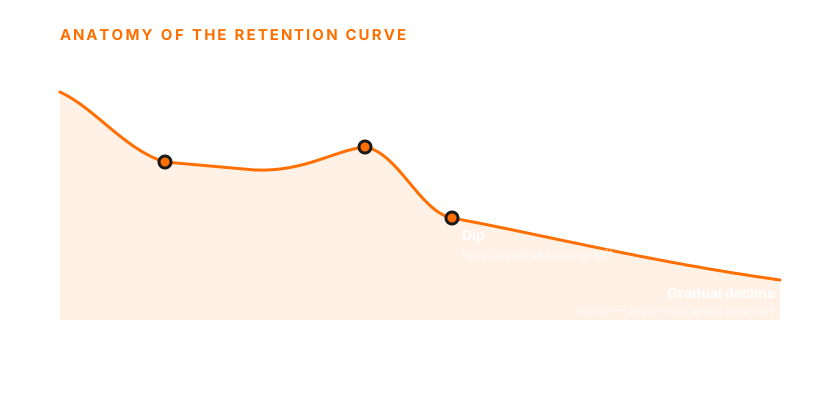
Your video might not have all of these points — YouTube only flags the ones it detects. And the official tip: if your best moments only happen in the middle or the end, bring the strong content earlier — the audience always shrinks over the course of the video, so the best has to come first.
5. Patterns that hold attention
- Visual variation — switch the shot, the framing or drop in some b-roll every so often — changing the camera shot is the fastest way.
- On-screen text and graphics — reinforce the idea and give one more reason to keep looking.
- Open hooks — leave a question hanging that only resolves further on (“but there was a problem…”).
- Promise and delivery — if the title and the thumbnail promise it, the video has to deliver — otherwise the person leaves and doesn't come back.
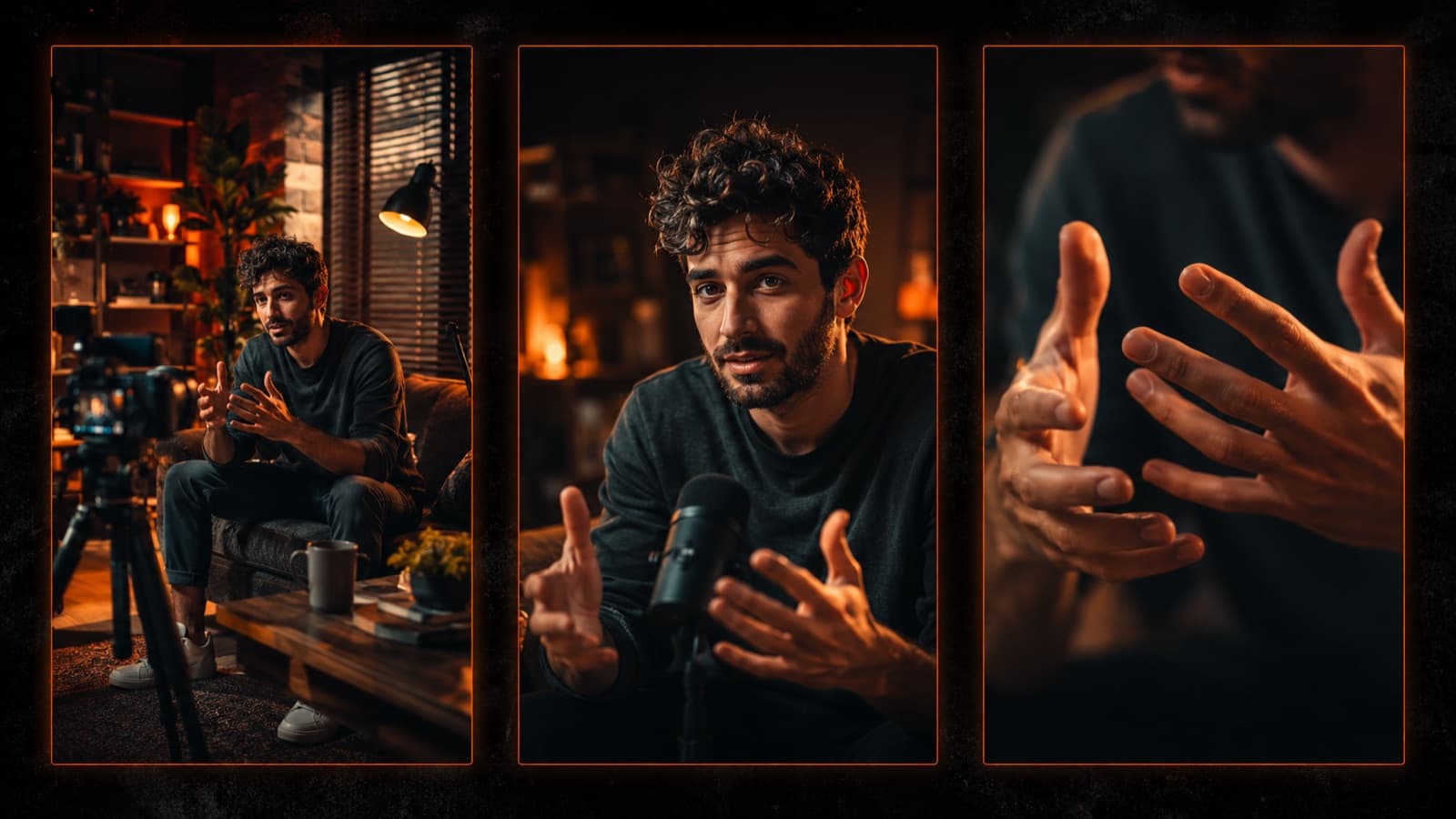
Watch the overdoing: the “cut every 3 seconds” rule is a myth. The eye needs about 3 seconds to take in a shot; what matters is changing something (angle, b-roll, graphic) before attention drops — not a frantic cut. Too much zoom, “whoosh” and jump-cut tires people out, the older audience especially.
Speaking of the promise: it starts before the play, in the thumbnail and the title. See what makes someone click.
6. Re-hooks: hold them AFTER the intro too
Hooking them at the start is half the game. The audience also slips away at the transitions — that instant between one topic and the next. The fix is the re-hook: every shift between sections should pull forward instead of sounding like a full stop.
- Tease what's coming — “in a bit I'll show you the part almost everyone gets wrong” — that opens a loop that holds until you get there.
- Open loops throughout the video — leave questions hanging and close them further on; never all at once.
- Why it works — it's the Zeigarnik effect (1927): we remember and feel “nagged” by what's left half-done — an unfinished topic holds attention.
7. Short-form (Reels, TikTok, Shorts) is a different game
On short vertical the window shrinks to ~1-2 seconds. Three things change:
- A hook in 1-2 seconds — there's no time to “warm up” — the first line or image is the hook.
- Text on the 1st frame (on mute) — most people start with no sound; a line on the screen right away holds whoever's scrolling the feed.
- Make the video loop — if the end joins the start, the person rewatches without noticing — and the replay inflates watch time (something the long video doesn't have).
- Track 3-second retention — on short-form it's the key metric: above ~70% is strong, below ~50% rewrite the opening.
8. Where HEY JOE comes in
Everything on this page — the right hook, lean pacing, cutting what's dead, bringing the strong moment early — is exactly the work of editing. It's the lever of retention, not the decoration: the cut at the right moment is what makes the person stay. And a technically good editor isn't enough — you need someone reliable, who hits deadlines and doesn't jam up your posting calendar.
At HEY JOE it's always the same editor handling your channel — the same hand on every video (more than 9,100 edited), a consistent style and a portal of your own where you track the status, the deadlines and everything organized in one place. You take care of what only you can do — the channel strategy, the numbers and the feedback on what's working; the part of turning the footage into a video that holds is on us. Want to know more about who'll edit your material? Meet HEY JOE.
Sources
- YouTube (official) — Key moments for audience retention — how YouTube defines Intro, Spikes, Dips and Top moments (+ the 60s/100-view threshold).
- YouTube (official) — Engagement — watch time and average view duration.
- Backlinko — YouTube retention benchmarks — market references for retention (unofficial).
- CogniFit — The Zeigarnik effect — why an unfinished topic holds attention (the basis of open loops).
Quick questions
What retention is “good” in the first seconds?
There's no official YouTube number, so treat this as a market benchmark: holding around 60-70% of the audience at 30 seconds is usually healthy, and losing more than ~40% over that stretch is a sign of a weak hook. On short video (Reels/TikTok/Shorts) the bar is harder — a 3-second retention above ~70% is strong, below ~50% means rewriting the opening. The ideal is to compare each video against your own average and aim higher.
How long until the retention curve shows up in Studio?
The audience retention report in YouTube Studio appears for any video with at least 60 seconds and 100 views, and the data takes about 1 to 2 days to process. Before that the sample is too small to trust. It works for any channel, in any country — it's the same Studio worldwide.
Why does my video lose so many people right at the start?
Almost always because of the opening: a long intro sequence, “hey everyone, how's it going?” and an ask to subscribe before delivering anything. Online viewers have a finger on the exit button, and YouTube reads that early drop-off as disappointment and stops recommending. The fix is to start with the strongest part — the promise, the question or the most surprising moment — and cut everything that comes before it.
Is it worth asking for likes and subscribes at the start of the video?
Right at the start, no — no one has arrived yet, so there's nothing to ask for, and every second spent on it is a chance for the person to leave. The best time for the call to action is after you've delivered value, when the viewer is already engaged, or at the end. Start with the hook; the ask comes once you've shown it's worth it.
Does cutting the video every few seconds increase retention?
Cutting what's dead, yes; cutting for the sake of cutting, no. The “a cut every 3 seconds” rule is a myth: the eye needs a few seconds to take in a shot, and too much zoom, “whoosh” and jump-cut tires people out, the older audience especially. What holds is changing something (angle, b-roll, graphic) before attention drops — pacing, not frenzy.
Do the retention rules apply to Reels, TikTok and Shorts too?
The principles yes, but the time shrinks a lot: on short vertical the hook window drops to 1 to 2 seconds, so the first line or image has to be the hook already. It's worth putting text on the first frame (most people watch with no sound) and making the video loop — if the end joins the start, the person rewatches without noticing and that inflates watch time. The key metric becomes 3-second retention.
Does editing really change retention, or is it just aesthetics?
It changes it, and you can measure it. Pacing, cuts, the hook, sound and color decide whether the person stays — and bad sound drops retention as much as a bad image, because the person gives up on listening. Editing is where the retention curve is built in practice: the right cut at the right moment is what turns a good recording into a video that holds from start to finish.
Pacing, curating what stays and the right hook are exactly what good editing builds. It's part of the work HEY JOE does on every video. That same first second decides a brand video or VSL and every clip when you turn one shoot into several pieces of content.