Grow on YouTube
Engagement and community: how to build an audience that comes back
There's a myth that engagement is something you get by asking: “drop a like, comment below, subscribe.” The truth is the opposite — real engagement isn't begged for at the end of the video, it's built on the timeline. The comment worth making, the end screen worth the next click, the pacing worth the return: all of it is an editing decision.
~10 min read
1. Engagement is a PROXY for satisfaction, not the goal
Likes, comments and shares don't “trick” the algorithm — they signal satisfaction. But what the system is really chasing is how the viewer feels (the “valued watchtime,” measured by satisfaction surveys) and, above all, whether they come back. A viewer who returns is one of the strongest loyalty signals there is.
- That's why genuine engagement > click volume — a share or a return is worth more than a like you asked for. Asking without delivering value moves nothing (and can annoy people).
- The return is the gold — YouTube now separates new / casual / loyal. The loyal viewer (watching for months) is your real audience — not the subscriber counter.
Why the algorithm measures the feeling (and not the click) is in the algorithm guide; how to see the return in your own data, in the Analytics one.
2. Comments: earn them, don't beg
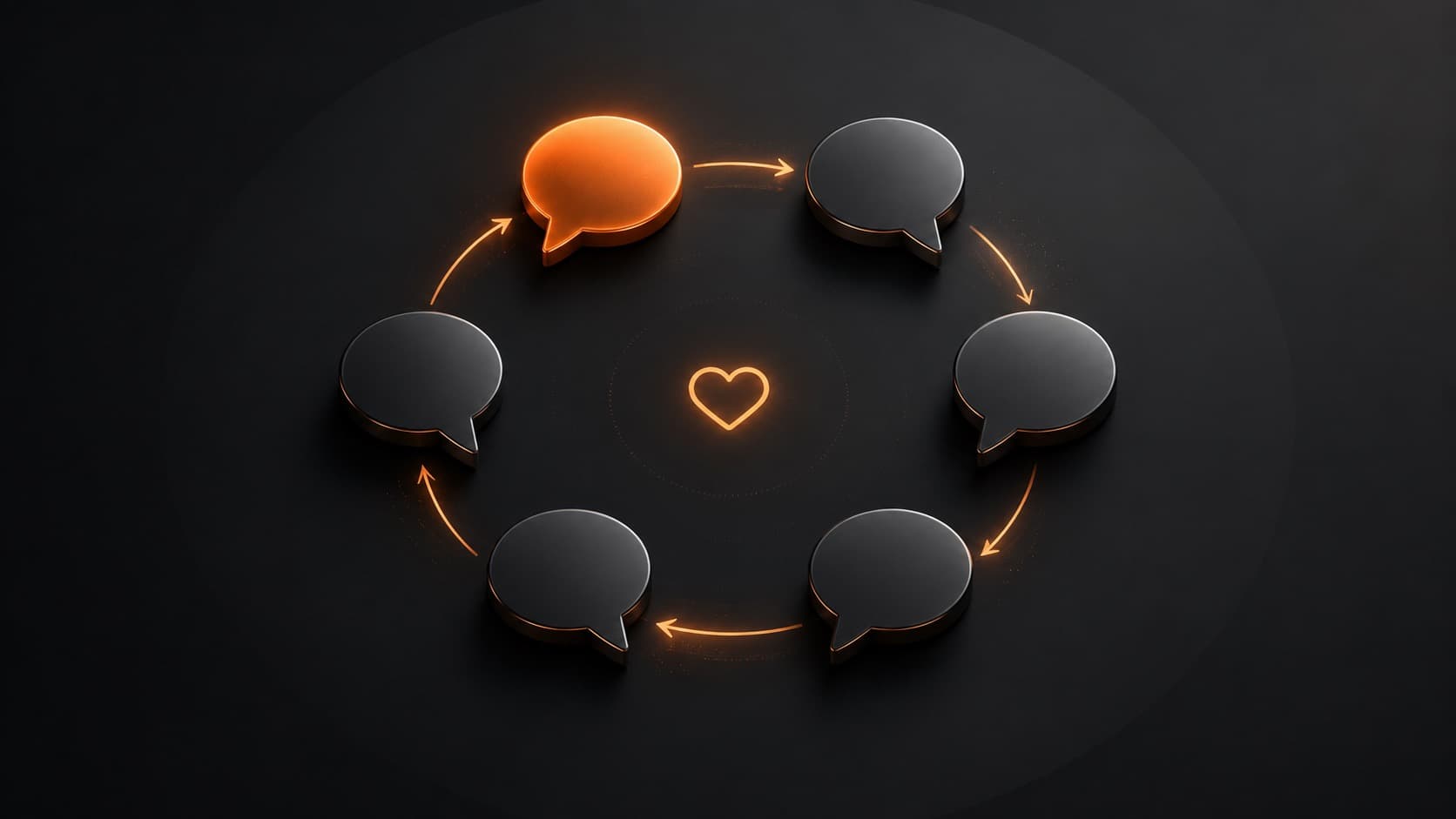
- Plant a specific question — in the narrative, not a generic “comment below.” Give the person a concrete reason to have an opinion.
- Reply fast in the first few hours — an academic study (CHI 2025) found that a creator heart/reply right after publishing is associated with more engagement over time.
- Pin a comment that opens the conversation — and use the tools: creator heart, moderators, blocked words. In Studio you can filter comments that “contain a question” to prioritize what to answer.
- Mine the comments — questions, objections and requests are your next topic — validated by the audience itself.
3. Keep the channel “warm” between uploads
The Posts tab (the old Community tab) and the new Communities space let you stay in touch between videos — text, images, polls, behind-the-scenes. The subscriber requirement was removed: today you just need Advanced features, no strikes, a non-kids audience. One poll or one behind-the-scenes a week keeps the channel in the subscriber's feed even without a new video — and that feeds the signal of ongoing relevance.
4. End screens and cards: a springboard, not a “goodbye”
The core idea: send the viewer to the next video (more session time), not off the platform.
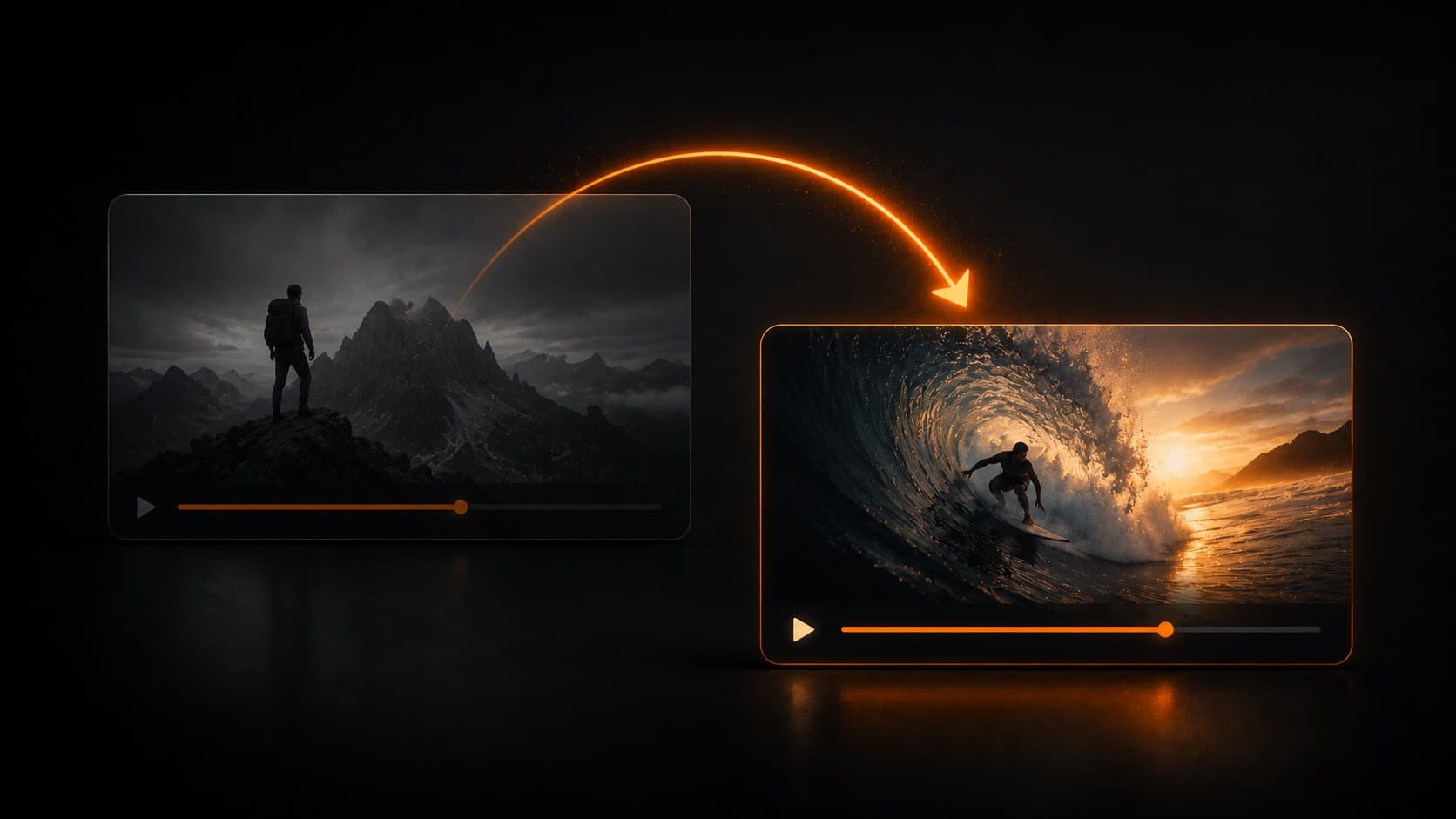
- End screens — show in the last 5–20s; the video has to be ≥25s; up to 4 elements. Pick 1 “logical next step” video + 1 subscribe — don't clutter it with four things.
- Cards — up to 5 per video, appearing at the right moment in the content, guiding without interrupting.
- Pinned comment — besides opening the conversation, it can point to the next video/playlist — another session anchor.
5. Playlists: the most underused loyalty lever
When a video ends and the next one in the playlist plays automatically, YouTube credits that continuity to your channel — one view becomes a session. In Studio you measure “views per playlist start” (how many videos a person watches per session). Editing with the “logical next episode” in mind turns someone who watched 1 into someone who watched 4. And the ask to subscribe works better after you've delivered value, not at second zero.
6. The bell lost its power (and subscribing doesn't guarantee a view)
7. The trick of the trade: engagement is engineered in the edit
Everything above turns into an editing decision, not an “ask at the end”:
- The CTA designed into the cut — right after the value peak, with room to breathe so it lands — not slapped on top.
- The end screen designed INSIDE the edit — the last 20s are composition, not leftover: the frame that launches into the next video.
- The hook that EARNS the comment — an open loop, a question planted in the narrative — the comment is drawn out by the structure.
- The pacing that earns the return — cuts that sustain attention raise satisfaction and the return — the signal the algorithm is chasing.
A professional editor designs the hook that wins the comment, the end screen that wins the next click and the pacing that wins the return. It's the difference between a channel that asks for attention and one that engineers it — and that's exactly what HEY JOE does on the timeline.
Quick questions
Does asking for likes and comments work?
Not much, on its own. Likes and comments are a PROXY for satisfaction, not the goal — what the algorithm is really chasing is how the viewer feels (the “valued watchtime,” measured by satisfaction surveys) and, above all, whether they come BACK. Asking for engagement without delivering value doesn't move the needle; it can even annoy people. Earn it with value, don't beg for it.
How do I get people to actually comment?
Comments are earned, not begged for: plant a specific question in the narrative (not a generic “comment below”), reply fast in the first few hours, and pin a comment that opens up the conversation. An academic study (CHI 2025) found that a creator heart/reply right after publishing is associated with more engagement on the video over time.
Do I need a lot of subscribers to use the Community tab (Posts)?
Not anymore. The old subscriber requirement was removed — today you just need Advanced features turned on, no strikes, and an audience not set as “made for kids.” In 2025 the feature was renamed from “Community tab” to “Posts,” and YouTube also launched “Communities” (a conversation space). One poll or behind-the-scenes a week keeps the channel showing up in the feed between uploads.
Is an end screen just for closing out the video?
No — it's a SESSION tool. The goal is to send the viewer to the NEXT video (more time on YouTube), not off the platform. Official specs: it shows in the last 5 to 20 seconds, the video has to be at least 25s, and you can fit up to 4 elements. Pick 1 “logical next step” video + 1 subscribe button, without cluttering it.
Does hitting the bell guarantee I get the notifications?
Not like it used to. In 2025, tech outlets reported that YouTube started testing stopping push notifications to subscribers who rarely watch, even with “All” turned on. Subscribing is the front door; what keeps you in someone's feed is their ongoing engagement with your content, not the act of clicking subscribe.
Do playlists help with loyalty?
A lot, and they're underused. When a video ends and the next one in the playlist plays, YouTube credits that continuity to your channel — one view becomes a session. In Studio you measure “views per playlist start” (how many videos a person watches per session). Editing with the “logical next episode” in mind turns someone who watched 1 into someone who watched 4.
Does posting every day build a loyal audience?
Not by itself. Frequency without retention and without return doesn't build loyalty — and too much generic content can even run into the “inauthentic content” wall. The signal that matters is the viewer coming BACK. Consistency with quality beats volume.
Sources
- On the recommendation system (blog.youtube) — engagement as a proxy for satisfaction; valued watchtime.
- Add end screens (YouTube Help) — last 5–20s, minimum 25s, up to 4 elements.
- Add cards (YouTube Help) — up to 5 cards per video.
- Learn about Posts (YouTube Help) — eligibility for the Community tab / Posts.
An audience that comes back isn't something you ask for — it's built in the cut. While you handle the algorithm and read your data, the part about engineering the hook, the end screen and the pacing that bring people back is on HEY JOE. And every recording earns more presence when you repurpose it across multiple pieces of content.